
Fall weather can be unpredictable. One day your home may barely need heating, and the next you’re reaching for the remote first thing in the morning.
Your Senville mini split system is well suited to these changing conditions because it can adjust its output as your home’s heating needs change. But getting comfortable fall heating isn’t just about switching the system to Heat Mode.
Your temperature setting, fan speed, airflow, filters and even the area around your outdoor unit can all affect how your system operates.
Here’s how to use your mini split throughout the fall heating season and what to expect as temperatures continue to drop.
What You’ll Learn
✓ Which mode to use when you want heat
✓ How to choose a comfortable temperature
✓ When to use Auto fan speed
✓ How airflow direction affects comfort
✓ Why you don’t need to constantly turn your system on and off
✓ How to keep indoor and outdoor airflow clear
✓ What normal heating operation can look like
✓ What to expect as colder weather arrives
1. Start With Heat Mode
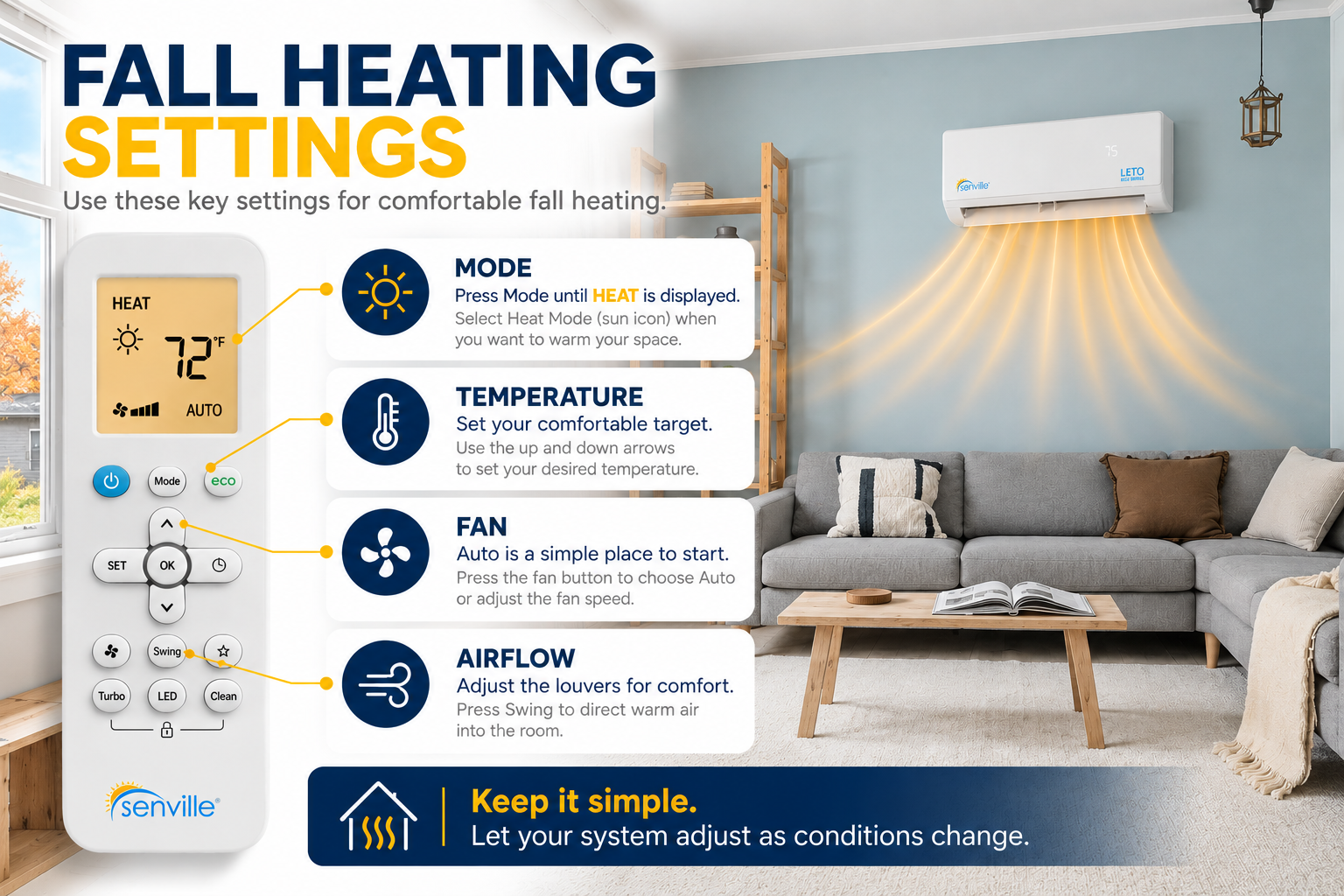
If your goal is to heat your space, start by selecting Heat Mode on your remote.
Press the MODE button until HEAT or the sun icon appears on the display. Then choose your desired temperature.
Auto Mode works differently. It allows the system to select an operating mode based on the room temperature and your set temperature. If you specifically want heating, selecting Heat Mode keeps things straightforward.
Need a refresher on changing modes? Read our guide on how to switch your mini split from cooling to heating.
QUICK ANSWER
Want your mini split to heat your home? Select Heat Mode, set your desired temperature above the current room temperature, and give the system a few minutes to respond.
2. What Temperature Should I Set My Mini Split to for Heat?
It can be tempting to turn the temperature way up when you walk into a chilly room, but a higher setting doesn’t necessarily make your mini split warm the room faster.
Instead, choose the temperature you actually want the space to reach and allow the system to work toward it. A good starting range is 68–72°F (20–22°C), then adjust from there based on your comfort.
Once your home reaches the set temperature, an inverter-driven mini split can adjust its output as heating demand changes rather than simply operating at full capacity all the time.
FALL COMFORT TIP
Try to avoid repeatedly making large temperature changes. A comfortable, consistent setting gives your system a clear target as outdoor conditions change throughout the day.
3. What Fan Speed Should I Use for Mini Split Heating?
Your fan setting controls how quickly air moves through the indoor unit.
For everyday fall heating, Auto fan is a simple place to start. The system can adjust fan operation based on current conditions.
You can also select a manual fan speed when you want more control.
| Fan Setting | What It Does |
|---|---|
| Low | Quieter, gentler airflow |
| Medium | Balanced airflow |
| High | Stronger air movement |
| Auto | Lets the system adjust fan operation automatically |
If you’ve just turned on the heat, don’t be surprised if the indoor fan doesn’t immediately blow at full speed. Some systems delay or adjust airflow during heating operation to avoid sending cool air into the room.
4. Adjust Your Airflow for Heating
Where you direct the air can make a noticeable difference in how the room feels.
Because warm air naturally rises, try angling the heated airflow downward and outward into the room rather than toward the ceiling. This can help distribute warmth more effectively throughout the occupied area.
Use the SWING or airflow controls on your remote to adjust the louvers, depending on your model. Also make sure furniture, curtains, shelves, or other objects aren’t blocking the indoor unit.
If your remote or airflow controls look different from the examples in this guide, visit the Senville Tech+ Center.
QUICK TIP
Your mini split needs room to move air. Keep the area directly around the indoor unit clear and avoid placing large furniture or other obstructions in the airflow path.
5. Should You Constantly Turn Your System On and Off?
One advantage of an inverter mini split is its ability to adjust output based on the heating needs of the space.
Once the room approaches your set temperature, the system can reduce its output rather than always operating at maximum capacity.
That means you may notice the system running at a lower level for longer periods instead of repeatedly switching completely on and off.
This can be normal.
Your ideal routine will still depend on how you use the space, your schedule and outdoor conditions, but you don’t need to constantly adjust the system every time the room feels comfortable.
6. Check Your Filters as Heating Use Increases
Your mini split filters help capture airborne particles as air circulates through the indoor unit.
As you begin using the system more regularly for heating, it’s a good time to check them.
A dirty filter can restrict airflow, so regular filter care is an important part of keeping your system operating properly. If yours are ready for a clean, follow our step-by-step guide on how to clean your mini split air filters.
For your specific system, follow the cleaning and maintenance instructions in your owner’s manual.
Fall Filter Check
Check your filters
Clean them if needed
Make sure the indoor unit isn’t obstructed
Check that the louvers can move freely
Confirm that airflow feels normal
7. Keep Fall Leaves Away From the Outdoor Unit
Your indoor unit isn’t the only part of the system that needs clear airflow.
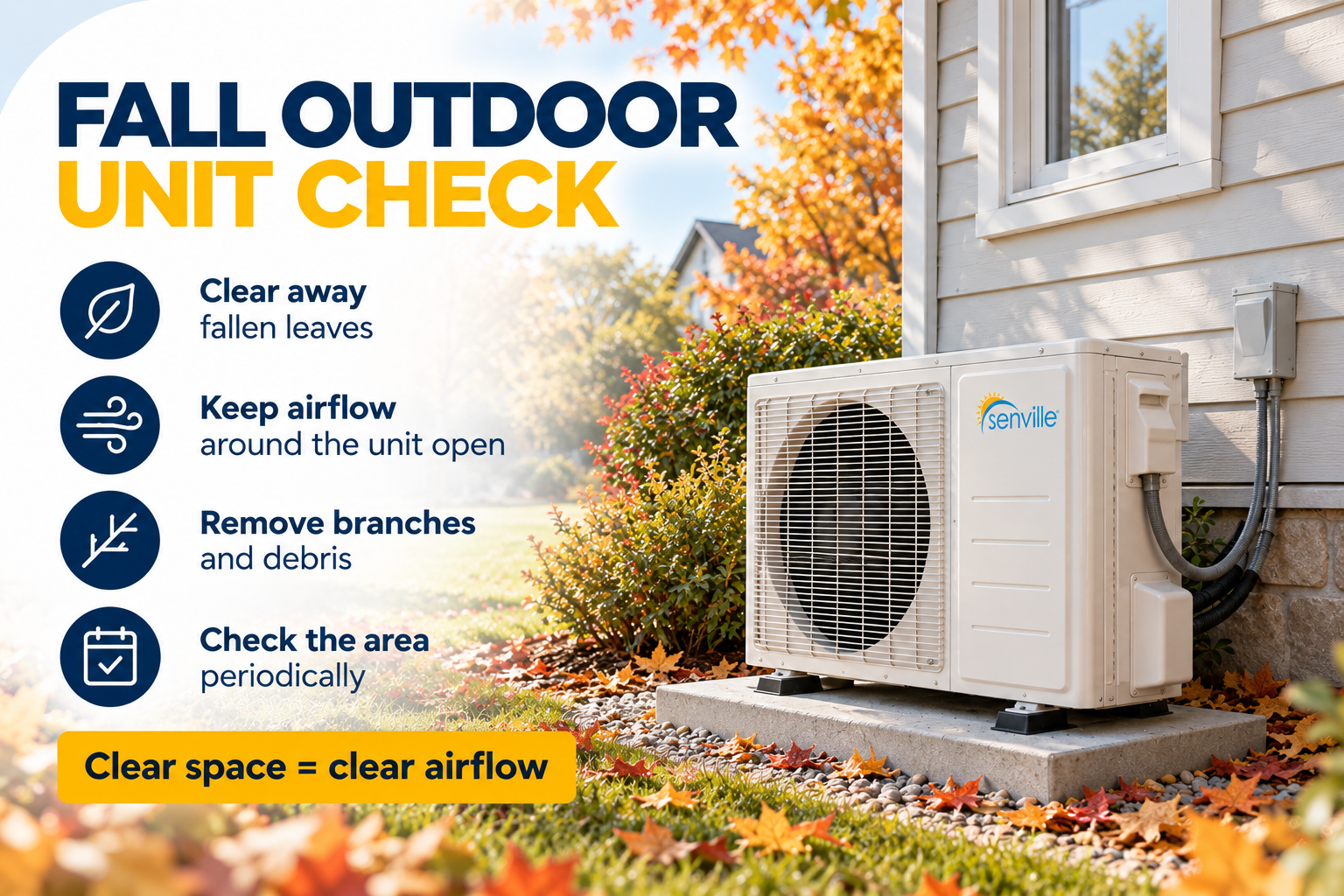
During fall, leaves and other debris can collect around the outdoor unit.
Periodically check the area and make sure the outdoor unit has adequate clearance for airflow. Avoid allowing leaves, branches or other debris to accumulate against it.
You don’t need to cover the outdoor unit while it’s operating. It is designed to remain outdoors while heating and cooling your home.
OUTDOOR UNIT CHECK
Keep the area around your outdoor unit clear, open and free of accumulated leaves and debris throughout the heating season.
8. Does Your Mini Split Need Time to Start Heating?
When you switch to Heat Mode, warm air may not come out immediately.
The system may take a few minutes to begin producing noticeable heat. The indoor fan may also temporarily operate differently during startup.
Before You Troubleshoot. Confirm that:
✓ Heat Mode is selected
✓ The set temperature is above the room temperature
✓ The filters are clean
✓ Airflow isn’t blocked
Give the system a little time before assuming something is wrong.
If it still isn’t heating as expected, check your owner’s manual or troubleshooting resources for your specific model.
9. Know What Defrost Looks Like
As fall gets colder, you may eventually notice your heat pump entering defrost mode.
When heating in cold conditions, frost can form on the outdoor coil. The system may temporarily enter a defrost cycle to remove it.
During defrost, you might notice:
- Heating temporarily pauses or changes
- The indoor fan behaves differently
- Water drains from the outdoor unit
- Steam appears around the outdoor unit
- Normal heating resumes afterward
These can all be normal parts of defrost operation.
Want to learn more about cold-weather heating? Read our guide to cold climate heat pumps and how they’re designed for lower outdoor temperatures.
GOOD TO KNOW
Defrost doesn’t necessarily mean something is wrong. It is a normal part of heat pump operation in certain cold and damp conditions and helps keep the outdoor coil clear.
10. Adjust as Fall Gets Colder
The way you use your mini split in early fall may be different from how you use it later in the season.
On milder days, the system may need very little output to maintain your set temperature. As outdoor temperatures fall, it may operate longer or at a higher output to meet the increased heating demand.
That’s why fall is a good time to become familiar with how your system normally sounds, feels and operates.
You’ll be better prepared to recognize normal changes in operation as colder weather arrives.
If you live in an area with colder winters and low-temperature heating is a priority, you can also explore the Senville Aura Series, designed for cold-climate operation.
Fall Mini Split Heating Checklist
A quick check to keep your system ready as temperatures fall.
Select Heat Mode when you want heating
Choose a comfortable set temperature
Try Auto fan for everyday operation
Adjust the louvers for comfortable airflow
Keep the indoor unit unobstructed
Check and clean filters as needed
Clear leaves and debris around the outdoor unit
Allow time for heating to begin
Learn what normal defrost operation looks like
Review your model’s manual if you’re unsure about a setting or feature
Frequently Asked Questions
Should I use Heat Mode or Auto Mode in the fall?
If your goal is specifically to heat your space, use Heat Mode. Auto Mode allows the system to automatically select an operating mode based on room and set temperatures.
What temperature should I set my mini split to in the fall?
There isn’t one temperature that works for every home. Choose a comfortable setting for your household and allow the system to work toward it rather than making frequent, large adjustments.
Should I leave my mini split running all day?
It depends on your home, schedule and comfort needs. Inverter systems can adjust their output as demand changes, so continuous low-level operation can be normal when maintaining a set temperature.
Why doesn’t my mini split blow warm air immediately?
A brief delay can be normal during heating startup. The system may wait before increasing indoor airflow so it doesn’t immediately circulate cool air.
Why is my outdoor unit steaming?
During colder weather, visible steam can occur while the system is defrosting the outdoor coil. This can be a normal part of heat pump operation.
Should I cover my outdoor mini split unit in the fall or winter?
Not while the system is operating. The outdoor unit needs unrestricted airflow to operate properly. Instead, keep the surrounding area clear of leaves, debris, snow and other obstructions.
Get Comfortable With Fall Heating
Fall is a great time to learn how your mini split behaves in heating mode before colder temperatures arrive.
Start with the basics: select Heat Mode, choose a comfortable temperature, keep airflow clear and give the system time to adjust. As temperatures drop, knowing what normal startup, inverter operation and defrost look like can also help you feel more confident using your system throughout the heating season.
If something doesn’t seem right, visit the Senville Tech+ Center for manuals, troubleshooting resources and product support.
Ready to explore your options? Browse Senville Mini Split Systems →