

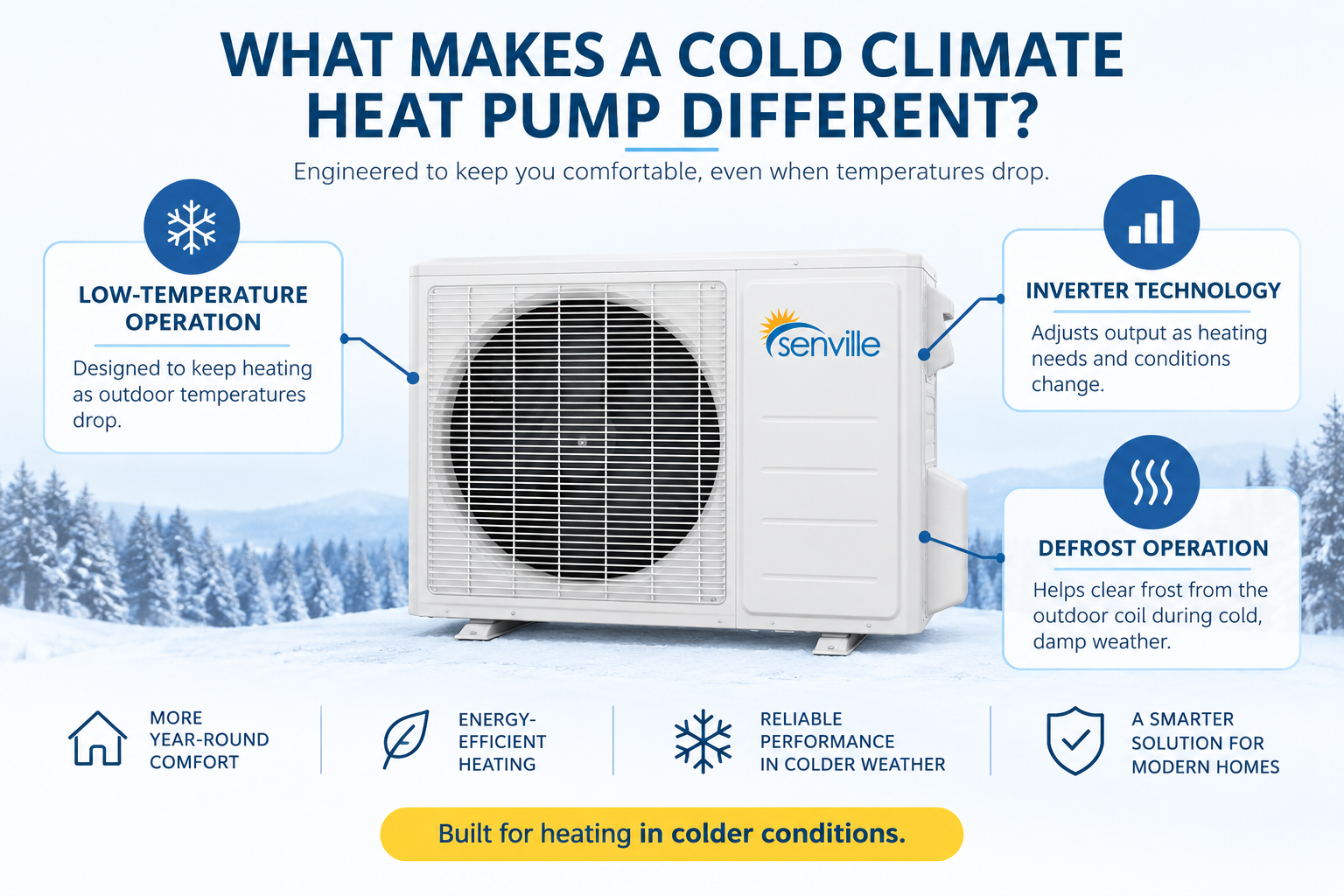
When temperatures drop, not every heat pump is designed to perform the same way.
A standard heat pump can be a great option in many climates, but homeowners in colder regions often need a system that can continue providing reliable heat when outdoor temperatures fall well below freezing.
That’s where a cold climate heat pump comes in.
These systems are designed specifically for lower-temperature operation, helping homeowners extend heat pump use further into the winter season.
In this guide, we’ll explain what makes a cold climate heat pump different, how it operates in colder weather, which specifications matter when comparing systems, and what to consider before choosing one for your home.
What You’ll Learn
✓ What makes a heat pump “cold climate”
✓ Why low-temperature heating performance matters
✓ How inverter technology helps in changing conditions
✓ What happens during a defrost cycle
✓ Which specifications to compare
✓ Whether supplemental heat may still be needed
✓ Who should consider a cold climate heat pump
✓ How the Senville AURA Series is designed for colder weather
1. What Is a Cold Climate Heat Pump?
A cold climate heat pump is designed to continue providing heating at lower outdoor temperatures than many conventional heat pump systems.
Like other heat pumps, it works by transferring heat rather than producing heat through electric resistance alone. Even when it feels cold outside, heat energy is still present in the outdoor air and can be transferred indoors.
The difference is how the system is designed to perform as outdoor temperatures fall.
Cold climate systems are engineered for more demanding winter conditions and typically offer a lower minimum outdoor heating temperature than systems intended primarily for milder climates.
QUICK ANSWER
A cold climate heat pump is designed to continue heating in lower outdoor temperatures. When comparing systems, look at the rated heating range and low-temperature performance of the exact model you’re considering.
2. Why Low-Temperature Performance Matters
Heat pumps don’t all share the same heating range.
As the outdoor temperature drops, heating becomes more demanding. That makes it especially important for homeowners in colder regions to look beyond general BTU capacity and cooling efficiency.
When comparing systems for cold-weather use, pay attention to:
- Minimum outdoor heating temperature
- Heating capacity at lower temperatures
- HSPF2
- COP
- Inverter technology
- Defrost operation
- Whether supplemental heat may be appropriate for your home
A system that works well in a mild winter climate may not be the best fit for a region that regularly experiences prolonged subfreezing temperatures.
COLD CLIMATE TIP
If winter heating is a major reason you’re considering a heat pump, compare its heating performance in cold weather, not just its overall efficiency rating.
3. Inverter Technology Helps the System Adapt
Modern inverter heat pumps can adjust their output as heating and cooling needs change.
Rather than operating only at full output and then shutting off, an inverter-driven compressor can increase or reduce capacity based on current conditions.
This can help the system:
- Maintain more consistent indoor temperatures
- Adapt as outdoor temperatures change
- Reduce unnecessary cycling
- Match output more closely to the needs of the home
- Operate efficiently during part-load conditions
This flexibility is especially useful during colder weather, when outdoor temperatures can change significantly throughout the day.
4. What Happens When Frost Forms?
During cold and damp conditions, frost can naturally form on the outdoor coil.
When enough frost develops, the heat pump may temporarily enter a defrost cycle.
What Happens During Defrost?
1. Heating may briefly change
The system temporarily shifts operation.
2. Frost is cleared
The outdoor coil warms to remove frost.
3. Frost melts away
Water drains from the outdoor unit.
4. Heating resumes
Normal heating operation continues.
You may also notice steam around the outdoor unit during this process. That can be completely normal.
GOOD TO KNOW
A defrost cycle is a normal part of cold-weather heat pump operation. It helps keep the outdoor coil clear so the system can continue operating properly.
5. Cold Climate Heat Pumps Still Need Proper Sizing
A low outdoor operating temperature doesn’t replace proper system sizing.
The heat pump still needs enough capacity to meet the heating and cooling needs of your home.
Several factors can influence those requirements:
| Factor | Why It Matters |
|---|---|
| Home size | Larger spaces generally require more heating and cooling capacity |
| Insulation | Insulation affects how quickly your home gains or loses heat |
| Windows | Size, quantity and efficiency can affect heat loss |
| Ceiling height | Higher ceilings increase the volume of air being conditioned |
| Local climate | Colder winter temperatures can increase heating demand |
| Home layout | Open and closed floor plans distribute conditioned air differently |
A professional load calculation is the best way to determine the appropriate system capacity for a specific home. Once you have a better idea of the capacity your space requires, explore Senville Mini Split Systems to compare available sizes and configurations.
6. Heating Efficiency Matters Too
Cooling efficiency is only one part of the picture when comparing cold climate heat pumps.
Two heating specifications worth understanding are HSPF2 and COP.
Heating Efficiency Terms to Know
HSPF2
A seasonal measure of heating efficiency.
COP
Compares heating output with the electricity used under a specific test condition.
When comparing systems, consider the overall combination of:
- Heating capacity
- Cold-weather operation
- HSPF2
- COP
- SEER2
- Home comfort needs
- Installation requirements
Always compare specifications for the exact model and capacity you’re considering, since ratings can vary within the same product series.
7. Do You Still Need Supplemental Heat?
Possibly.
A cold climate heat pump can extend heat pump operation much further into colder weather, but whether a home needs supplemental heat depends on the specific installation.
Whether Supplemental Heat Is Needed Depends On:
• Local climate
• The home’s heat loss
• Insulation
• Building envelope
• System capacity
• Desired indoor temperature
• Heating output at the local winter design temperature
A qualified HVAC professional can help determine how much heating capacity your home needs and whether backup heat should be part of the system design.
8. Who Should Consider a Cold Climate Heat Pump?
A Cold Climate Heat Pump May Be Worth Considering If You:
✓ Live in an area with regular subfreezing temperatures
✓ Want to use your heat pump for more of the heating season
✓ Want both heating and cooling from one system
✓ Need stronger low-temperature heating performance
✓ Are replacing or supplementing electric resistance heat
✓ Are heating a cabin, addition, workshop or other space exposed to colder winter conditions
The right choice will still depend on your home, climate and heating requirements. Heating several rooms? Explore Senville Multi-Zone Mini Split Systems for configurations that connect multiple indoor units to one outdoor unit.
9. Meet the Senville AURA Series
The Senville AURA Series is designed for colder climates, with heating operation down to -22°F (-30°C) on applicable models. This operating range does not mean the system maintains its full rated heating capacity at that temperature. Available heating output varies by model, so proper sizing remains important.
That makes AURA a strong option for homeowners looking for more cold-weather heating capability from their mini split system.
The series is available in both single-zone and multi-zone configurations, allowing you to choose a setup based on the number of spaces you want to heat and cool.
Depending on the model and configuration, AURA features include:
- Inverter-driven operation
- ENERGY STAR® certification
- Smart-home connectivity
- Multiple indoor unit options
- Single-zone and multi-zone configurations
- 10-year compressor and 5-year parts warranty (subject to applicable warranty terms)
Cold Climate Snapshot
Senville AURA Series
Heating operation: Down to -22°F (-30°C)
Configurations: Single-zone and multi-zone
Designed for: Colder climates and extended heating-season operation
10. What to Compare Before You Buy
Before choosing a cold climate heat pump, compare more than the lowest temperature shown on the product page.
Compare Before You Buy
Look beyond the headline temperature rating and compare the full system.
Minimum outdoor heating temperature
Heating capacity
HSPF2
COP
SEER2
Single-zone or multi-zone configuration
Indoor unit options
Electrical requirements
Line set requirements
Warranty coverage
Installation requirements
Whether supplemental heat may be needed
Looking at these factors together will give you a much clearer picture of how well a system fits your home and climate.
Frequently Asked Questions
What temperature is too cold for a heat pump?
There isn’t one universal cutoff temperature for every heat pump. Each system has its own rated outdoor operating range. Check the heating specifications for the exact model you’re considering.
Do cold climate heat pumps work below freezing?
Yes. Cold climate heat pumps are specifically designed to continue operating below freezing. The minimum outdoor temperature and heating performance will depend on the system.
What happens during defrost?
When frost forms on the outdoor coil, the system may temporarily enter a defrost cycle to clear it. Heating may briefly pause or change before normal operation resumes.
Is a cold climate heat pump different from a standard heat pump?
Both use the same basic heat pump principle, but cold climate systems are specifically designed for stronger heating performance at lower outdoor temperatures.
Can a cold climate heat pump be my main source of heat?
In some homes, yes. Whether it can serve as the primary heat source depends on the home’s heating load, climate, insulation and the capacity of the specific system.
How cold can the Senville AURA Series operate in heating mode?
Applicable AURA models are designed for heating operation down to -22°F (-30°C). Always confirm the specifications for the exact model and capacity you’re considering.
Choose a System Designed for Your Climate
Cold-weather performance is about more than finding the lowest temperature on a specification sheet.
The right heat pump should match your home’s heating needs, provide enough capacity for your climate and offer the efficiency and comfort features that matter throughout the season.
If you live in an area with colder winters, comparing low-temperature heating performance before you buy can help you choose a system that’s better suited to the conditions your home actually experiences.